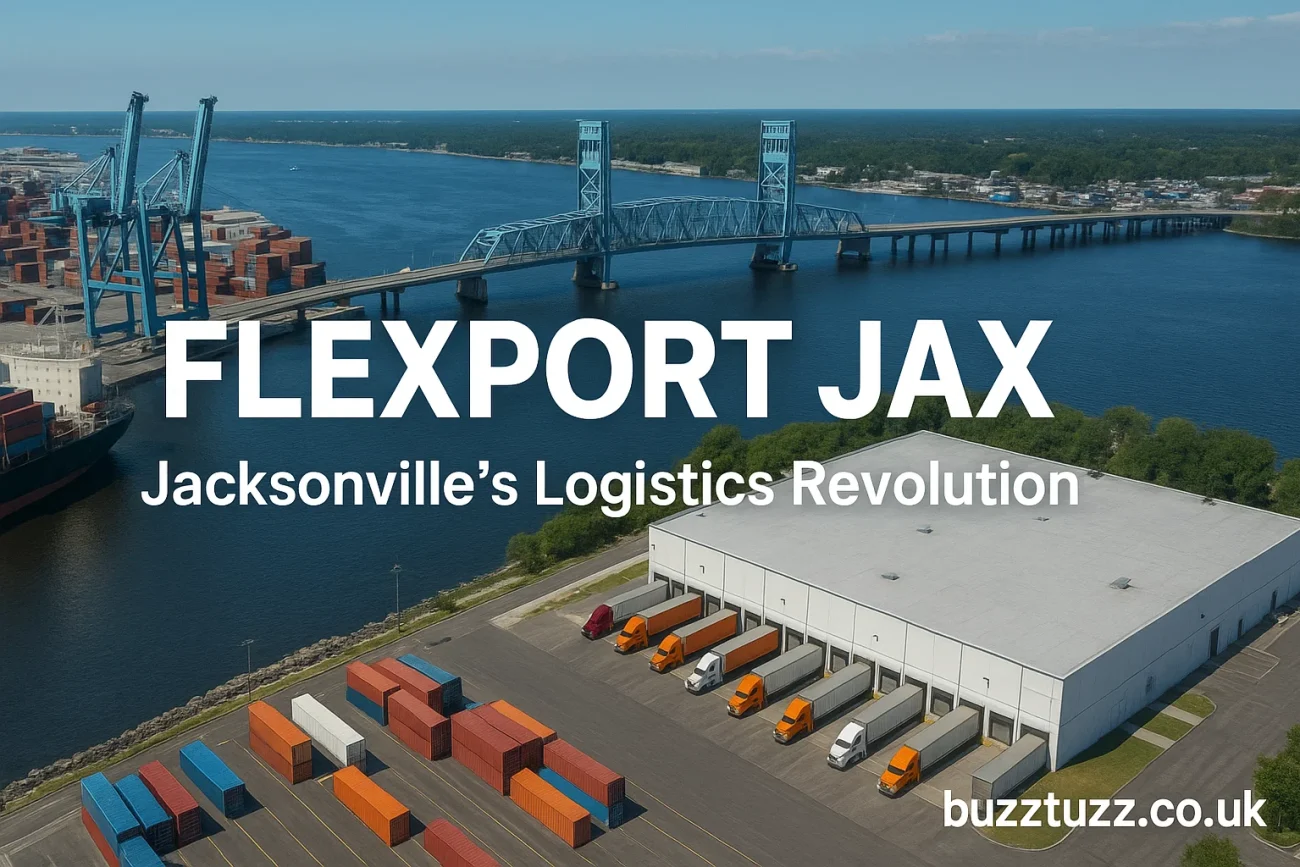
In an era where global supply chains are increasingly complex and unpredictable, the need for agile, technology-driven logistics solutions has never been more critical. Enter Flexport JAX, a dynamic expansion of the freight-forwarding disruptor Flexport into Jacksonville, Florida. This initiative is more than a regional facility; it represents a strategic pivot in how logistics companies leverage location, technology, and infrastructure to transform global trade. From digital supply chain management to multimodal freight capabilities, Flexport JAX is positioning itself as a cornerstone of modern logistics in the Southeastern United States.
This article explores the development, strategic advantages, and far-reaching impact of Flexport JAX. We’ll analyze how this facility is influencing trade routes, empowering regional economies, and setting new benchmarks in logistics technology and transparency.
Flexport: A Disruptive Force in Global Freight
Founded in 2013 by entrepreneur Ryan Petersen, Flexport emerged from the need to bring Silicon Valley-level software innovation to the world of global freight forwarding. Traditionally dominated by spreadsheets, email threads, and opaque chains of communication, the logistics industry was ripe for disruption.
Flexport’s digital platform integrates air, ocean, rail, and trucking logistics while offering real-time visibility and powerful data analytics. By offering clients a dashboard-driven experience—similar to managing a digital investment portfolio—Flexport empowers businesses with insights, cost-control mechanisms, and predictive analytics that were previously inaccessible.
Why Jacksonville? The Strategic Advantage
Geographical Significance
Jacksonville is more than just a dot on the map. It’s a strategic logistics hub with access to:
- Three major railroads (CSX, Norfolk Southern, Florida East Coast Railway)
- An international seaport—the Jacksonville Port Authority (JAXPORT)
- Interstate connectivity (I-10, I-95)
- Jacksonville International Airport (JIA)
Flexport JAX’s proximity to these resources allows it to seamlessly integrate air, sea, rail, and truck freight. This level of intermodal connectivity dramatically reduces transit times and enables businesses to optimize shipping costs.
Economic Incentives
Florida and the city of Jacksonville offer a range of incentives for logistics firms, including tax breaks, port credits, and grants for job creation. This makes Jacksonville an attractive option for firms looking to expand without inflating operational costs.
Inside the Flexport JAX Facility
Infrastructure and Capacity
Flexport JAX boasts a state-of-the-art logistics campus designed for scalability and operational efficiency. Key features include:
- Automated warehousing systems
- Real-time inventory tracking
- On-site U.S. Customs and Border Protection coordination
- Smart loading docks with AI traffic optimization
Technology Integration
The facility acts as a physical extension of Flexport’s digital platform. Clients can:
- Monitor shipments in real time
- Integrate ERP systems for seamless order management
- Access predictive analytics for demand forecasting
Through advanced IoT (Internet of Things) devices and cloud-based APIs, Flexport JAX turns real-world logistics into an actionable data stream.
Impact on Regional and National Supply Chains
Faster Transit Times
With Jacksonville serving as a coastal entry point, Flexport JAX reduces delivery times for East Coast and Southeastern U.S. markets by 2–4 days compared to West Coast-based logistics.
Economic Development
Flexport JAX is not just creating jobs—it’s nurturing a logistics ecosystem. From warehousing to software development, the facility has catalyzed growth in:
- Local tech startups
- Trucking companies
- Port services and customs brokers
Supply Chain Resilience
By decentralizing logistics away from overly congested West Coast ports, Flexport JAX adds a critical node in enhancing national supply chain resilience. During the COVID-19 pandemic, and in the wake of global disruptions like the Suez Canal blockage, East Coast ports proved essential. Flexport JAX builds on that momentum.
Flexport JAX and Sustainability
Sustainability is at the core of Flexport’s mission. The Jacksonville facility incorporates several green logistics practices:
- Electric yard trucks and forklifts
- Solar-powered operations
- Recyclable packaging initiatives
- Carbon offsetting programs
These initiatives align with Flexport’s broader commitment to environmental, social, and governance (ESG) criteria, enhancing their appeal to eco-conscious partners and clients.
Case Studies: Real-World Impact of Flexport JAX
Case Study 1: Retail Distribution
A national retail chain previously relying on West Coast imports now routes 60% of its shipments through Flexport JAX. The result: 18% reduction in delivery time, 12% cost savings, and improved inventory turnover.
Case Study 2: E-commerce Fulfillment
A direct-to-consumer electronics brand leverages Flexport JAX’s proximity to major East Coast urban centers for two-day delivery capabilities, rivaling Amazon’s logistics network.
Case Study 3: Agricultural Exports
Florida citrus exporters benefit from Flexport JAX’s streamlined customs process, reducing spoilage and enhancing profit margins on international shipments.
Expert Opinions and Industry Insights
According to John D. Baker, a logistics professor at the University of North Florida:
“Flexport JAX is more than a fulfillment center. It’s a logistics brain powered by AI, machine learning, and predictive analytics. It sets a new bar for how logistics should operate in the 21st century.”
Additionally, the Port of Jacksonville has noted a significant uptick in intermodal shipping demand, much of which is attributed to Flexport’s presence.
Challenges and Future Outlook
Scalability and Talent Acquisition
Flexport JAX’s rapid growth demands a steady pipeline of logistics talent, from warehouse technicians to data engineers. Collaborations with local universities and community colleges aim to bridge this gap.
Regulatory Landscape
As global trade becomes more politically fraught, Flexport JAX will need to stay agile in navigating new trade restrictions, tariffs, and compliance frameworks.
Future Plans
Flexport is exploring options to expand the JAX facility to include:
- A cold-chain logistics center
- Autonomous vehicle testing for freight
- Drone-assisted inventory management
Conclusion: The Flexport JAX Advantage
Flexport JAX stands at the intersection of technology, logistics, and economic strategy. By tapping into Jacksonville’s geographic strengths and supercharging them with Flexport’s digital innovation, the facility has become a blueprint for the future of logistics.
For businesses seeking faster, smarter, and more sustainable freight solutions, Flexport JAX offers a compelling value proposition. As global trade evolves, Flexport JAX is not just keeping pace—it’s setting the pace.
