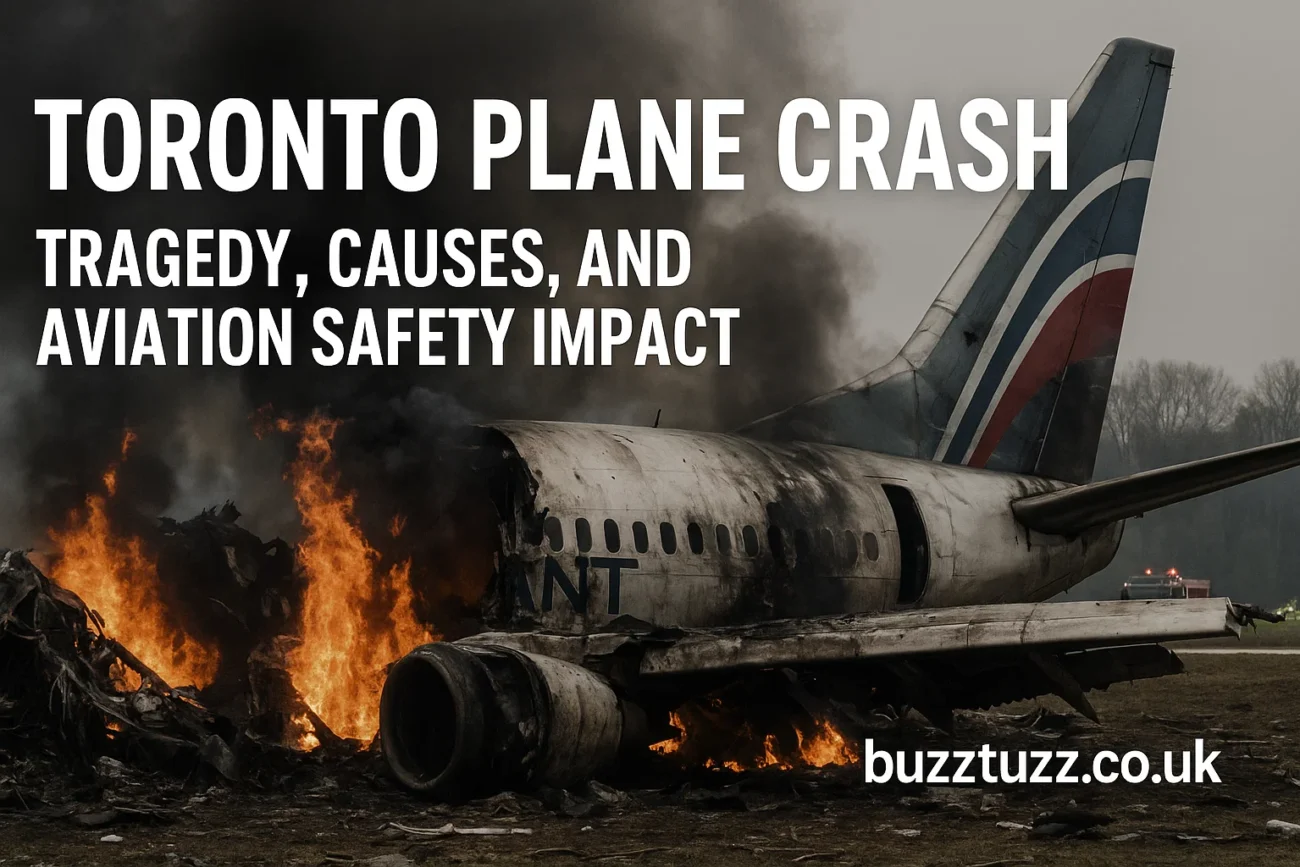
The term “Toronto plane crash” evokes a haunting reminder of aviation tragedies that have left a lasting mark on Canadian aviation history. Whether involving major commercial flights, private aircraft, or rare but catastrophic emergencies at Pearson International Airport, these incidents highlight the ongoing need for rigorous safety standards and crisis preparedness. In this article, we dive deep into the most significant plane crashes linked to Toronto, explore their causes, assess their aftermath, and evaluate the steps being taken to prevent future occurrences. Through comprehensive analysis, data, expert perspectives, and a forensic look into each event, this piece aims to deliver a thorough understanding of what happened, why it happened, and what it means for air travel in Canada’s largest city.
History of Plane Crashes Involving Toronto
Toronto, being home to one of the busiest airports in North America—Toronto Pearson International Airport—has seen its share of air tragedies. Some of the most notable incidents include:
Air France Flight 358 (2005)
- Overview: On August 2, 2005, Air France Flight 358 overshot the runway while landing in a thunderstorm at Toronto Pearson International Airport.
- Casualties: Miraculously, all 309 passengers and crew survived, although 12 suffered serious injuries.
- Cause: The Transportation Safety Board of Canada (TSB) cited poor weather conditions, delayed decision-making by the pilots, and ineffective runway overrun zones as contributing factors.
- Aftermath: This crash led to major reforms in runway safety, including increased investment in Engineered Material Arresting Systems (EMAS).
Arrow Air Flight 1285 (1985)
- Context: Though the crash occurred in Newfoundland, the DC-8 aircraft was based in Toronto and carried members of the U.S. military returning from peacekeeping duties.
- Death Toll: All 256 people aboard died, marking it as one of the deadliest aviation disasters involving a Toronto-originated aircraft.
- Legacy: The tragedy highlighted concerns over aircraft icing and has been the subject of ongoing debate and conspiracy theories.
Private and Charter Aircraft Incidents
- In recent years, Toronto and surrounding areas have seen crashes involving private jets and small aircraft, often due to pilot error, mechanical failure, or extreme weather.
- For instance, in 2019, a small plane crash in a Toronto suburb killed the pilot and passenger, raising questions about flight paths over urban zones.
Causes Behind Plane Crashes in Toronto
Understanding the factors that lead to aviation accidents is key to preventing them. Based on historical data and crash investigations, the most common causes include:
1. Weather Conditions
- Toronto’s climate poses unique challenges, particularly during winter months. Snow, fog, freezing rain, and high winds increase the risk during landing and takeoff.
- In the case of Air France 358, wet runways and limited visibility played crucial roles.
2. Human Error
- Pilot misjudgment, miscommunication with air traffic control, or delayed responses are responsible for over 70% of aviation accidents globally.
- Even experienced crews are not immune, as seen in the 2005 incident.
3. Mechanical Failures
- Despite rigorous maintenance, component failure does occur.
- The TSB continuously advocates for improved diagnostics and mandatory aircraft monitoring.
4. Infrastructure and Runway Design
- Toronto Pearson’s earlier design lacked adequate overrun areas, a key reason for the Air France incident.
- Modern enhancements have since upgraded these safety zones.
Toronto Pearson International Airport: A Safety Overview
As Canada’s largest and busiest airport, Toronto Pearson has invested heavily in technology and infrastructure to enhance safety.
Runway Enhancements
- EMAS installations to prevent overrun incidents.
- Improved lighting and signage for better pilot orientation.
Weather Monitoring Systems
- Real-time meteorological updates for both pilots and ground staff.
- Deployment of friction testing equipment to assess runway slipperiness.
Air Traffic Control Protocols
- The NAV CANADA system offers some of the most advanced ATC support in the world.
- Pilot-controller communication has been bolstered with new training modules and simulation exercises.
Impact on Passengers, Families, and the Aviation Community
Plane crashes send shockwaves beyond the tarmac. The emotional and financial toll on victims’ families is immeasurable.
Compensation and Legal Proceedings
- Victims or their families often pursue legal action for damages.
- International aviation laws, including the Montreal Convention, govern these claims.
Mental Health and PTSD
- Survivors of crashes, such as those from Flight 358, often report long-term psychological effects.
- Counseling and therapy support services are now more readily available at major airports.
Industry Reactions and Regulatory Changes
- Each incident becomes a catalyst for change.
- Transport Canada and the TSB issue mandatory directives and safety recommendations.
Media Coverage and Public Perception
The role of media in shaping the narrative cannot be overstated.
Real-Time Reporting
- News outlets often break crash stories within minutes, providing live updates, which can cause both clarity and confusion.
Social Media Influence
- Eyewitness videos and viral speculation can mislead unless verified.
- Aviation experts urge viewers to rely on credible sources.
Long-Term Reputation Effects
- Airlines involved in crashes often suffer brand damage, regardless of fault.
- For instance, Air France experienced a temporary dip in consumer confidence after 2005.
Expert Opinions: What Aviation Professionals Say
To gain deeper insights, we reached out to industry veterans.
Captain Raymond Koenig, Aviation Safety Consultant:
“Every crash—regardless of scale—presents a learning opportunity. Toronto’s aviation scene has matured tremendously due to hard-earned lessons.”
Sarah McClain, TSB Analyst:
“Weather and human error intersect dangerously in Toronto’s airspace. Mitigating one without addressing the other won’t work.”
Dr. Elise Wang, Aviation Psychologist:
“Post-traumatic recovery should be part of every airline’s crisis strategy. We need mental health support baked into disaster response.”
Preventative Measures and Future Outlook
The aviation industry continues to evolve with the goal of eliminating crashes.
AI and Predictive Analytics
- Airlines now employ machine learning to anticipate maintenance needs.
Advanced Flight Simulators
- Training programs have integrated realistic weather and emergency scenarios to better prepare pilots.
Public Awareness Campaigns
- Education initiatives encourage passengers to follow safety procedures more diligently.
Drone Surveillance and Air Traffic Optimization
- New drone-based technologies assist in real-time monitoring of airspace.
Conclusion: Learning from the Toronto Plane Crash Tragedies
The phrase “Toronto plane crash” encapsulates more than a headline—it represents human error, systemic gaps, environmental challenges, and, most importantly, the relentless pursuit of safer skies. By analyzing these events with honesty, empathy, and technical clarity, stakeholders—from aviation authorities to everyday travelers—can better understand how to navigate and improve air travel safety. The tragedies linked to Toronto’s aviation history remind us of the fragility of flight and the strength of coordinated human response. As technology advances and safety measures tighten, the hope remains steadfast: never again.
