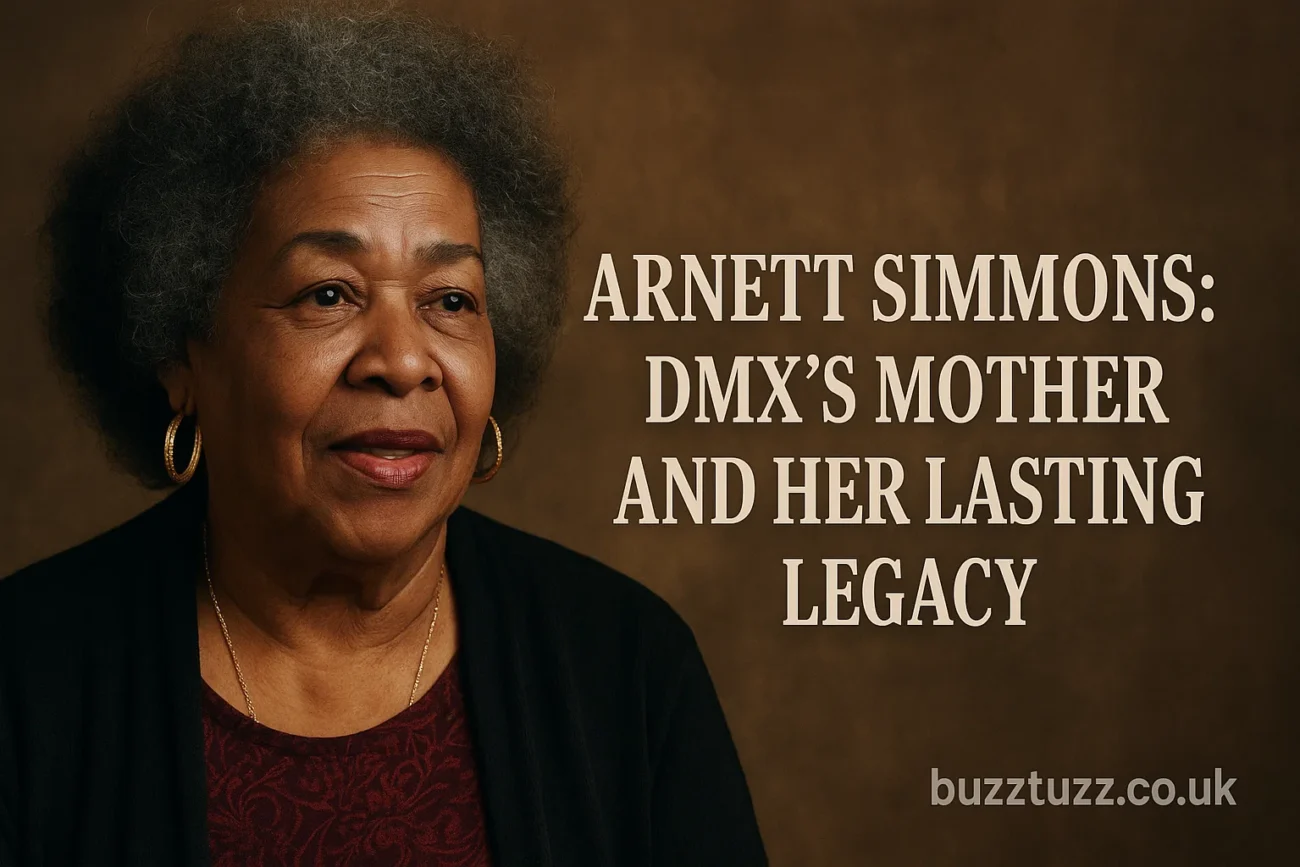
Arnett Simmons is a name that echoes through the annals of hip-hop history, not for her own fame, but for her profound and complicated role in shaping the life of one of rap’s most influential figures—her son, Earl Simmons, better known to the world as DMX. While DMX’s music, marked by raw emotion and spiritual conflict, won him millions of fans, his troubled upbringing was a recurrent theme in his lyrics. Central to that story is his mother, Arnett Simmons.
This article explores the life and legacy of Arnett Simmons, drawing from real-life accounts, interviews, biographies, and public records to piece together the complex dynamics between a mother and a son caught in a whirlwind of pain, redemption, and legacy. From her early life to her controversial parenting, to the moments of reconciliation and reflection later in life, we analyze her influence on DMX and her place in the broader narrative of fame, trauma, and healing.
Arnett Simmons: Early Life and Background
Arnett Simmons was born in 1951 in the United States. While not much is known about her formative years, she became a mother at a young age. By the time she was 19, she had given birth to her second child, Earl Simmons. Her relationship with DMX’s father, Joe Barker, was short-lived, and she raised her children largely on her own in Yonkers, New York, amid financial and emotional hardship.
Her life was marked by grief and loss—Arnett reportedly had two sons who were stillborn. These personal tragedies, combined with a single mother’s burden of raising children in a tough urban environment, shaped her worldview and, by extension, her parenting style.
A Home Filled With Turmoil: Abuse and Survival
DMX’s accounts of his childhood paint a harrowing picture. In his 2002 memoir, “E.A.R.L.: The Autobiography of DMX,” he recounts a household defined by violence, emotional neglect, and instability. He describes frequent beatings by Arnett and abuse by her boyfriends. DMX claimed that his mother once knocked out his teeth with a broomstick.
Perhaps the most shocking event in their relationship came when Arnett took him to a group home under the pretense of visiting it—only to leave him there permanently. At just seven years old, Earl found himself abandoned in a system that he later said deepened his sense of betrayal and mistrust.
Systemic Failures and Cultural Context
While Arnett’s actions were unquestionably harsh, it’s important to contextualize them within the broader systemic issues faced by many Black mothers during that era. Underfunded public schools, widespread poverty, lack of mental health resources, and systemic racism created a high-pressure environment that often left parents with limited tools to cope.
Arnett’s struggles were compounded by these realities. The 1970s and 80s were brutal for single mothers in urban America. Welfare cuts, crime-ridden neighborhoods, and the crack epidemic all served as barriers to stability. While these factors do not excuse abuse, they offer crucial insights into the stressors that shaped her behavior.
DMX’s Rise to Fame and Public Reflections on His Mother
DMX burst onto the rap scene in the late 1990s with an intensity that stood in contrast to the glossy commercialization of hip-hop at the time. His debut album, “It’s Dark and Hell Is Hot,” sold more than five million copies and established him as a gritty, raw voice of authenticity.
But behind the tough exterior was a man wrestling with demons, many of which originated in his childhood. DMX frequently referenced his mother in interviews and songs—sometimes with pain, sometimes with hope. Despite their complicated past, he expressed love and longing for her approval.
In later years, DMX sought to understand and forgive his mother. He acknowledged that she had done what she could, given her circumstances. In a powerful scene from the reality series “Iyanla: Fix My Life,” DMX broke down in tears while discussing his mother, illustrating the emotional complexity of their bond.
The Role of Faith and Forgiveness
Both Arnett and DMX were people of faith, and this spiritual grounding played a critical role in their journey toward reconciliation. DMX often turned to the Bible and prayer for comfort and guidance, and he credited his survival to divine intervention.
Forgiveness became a major theme in his later life. In interviews and performances, he would speak of letting go of anger toward his mother. In 2012, DMX said, “I know my mother did the best she could. I forgive her.”
This was a powerful statement, not just for their relationship but for fans who found inspiration in his ability to find peace amidst chaos. It was a reminder that healing, while never simple, is possible.
Arnett Simmons’ Life Out of the Spotlight
Unlike many celebrity parents, Arnett Simmons maintained a private life. She rarely gave interviews and was seldom seen in the public eye. This discretion may have been a conscious choice to protect her privacy or an acknowledgment of the controversial nature of her past.
She reportedly became more involved in church and community work later in life. Close family members described her as a woman who had undergone significant personal growth. According to some sources, she made efforts to rebuild relationships with her children and grandchildren in her later years.
The Death of DMX and the Public’s Perception of Arnett Simmons
When DMX passed away in April 2021 due to a heart attack reportedly brought on by a drug overdose, the world mourned the loss of a cultural icon. Fans, fellow artists, and public figures paid tribute to his legacy.
Amid this mourning, questions arose about Arnett Simmons. Some fans were critical, pointing to the abusive past. Others were more forgiving, acknowledging the pain she too must have carried. Her statement after his death was brief and dignified, emphasizing his spiritual strength and artistic legacy.
Public perception of Arnett remains divided—some see her as a symbol of maternal failure, others as a mother who, despite severe shortcomings, tried her best in a broken world.
Legacy and Cultural Reflection
Arnett Simmons’ story forces us to confront uncomfortable truths about parenting, trauma, and systemic injustice. She was a flawed individual who, through her son’s fame, became a symbol of both the damage and the resilience that define many American families.
Her legacy is intertwined with DMX’s. As he once said, “Pain is a part of life. But it doesn’t have to define it.” In understanding Arnett Simmons, we gain a fuller picture of the man DMX became—a man whose genius was inseparable from his pain.
Conclusion
Arnett Simmons was not a public figure by choice, but her influence on DMX ensures her place in the cultural memory. Her story is a cautionary tale, a case study, and a human narrative rolled into one. It invites us to look deeper—beyond the headlines, beyond the trauma—to understand the complexities of motherhood, survival, and legacy.
For those navigating similar struggles, her story is both a warning and a hope: that the cycle of pain can be broken, that healing is possible, and that every story, no matter how dark, has the potential for redemption.
