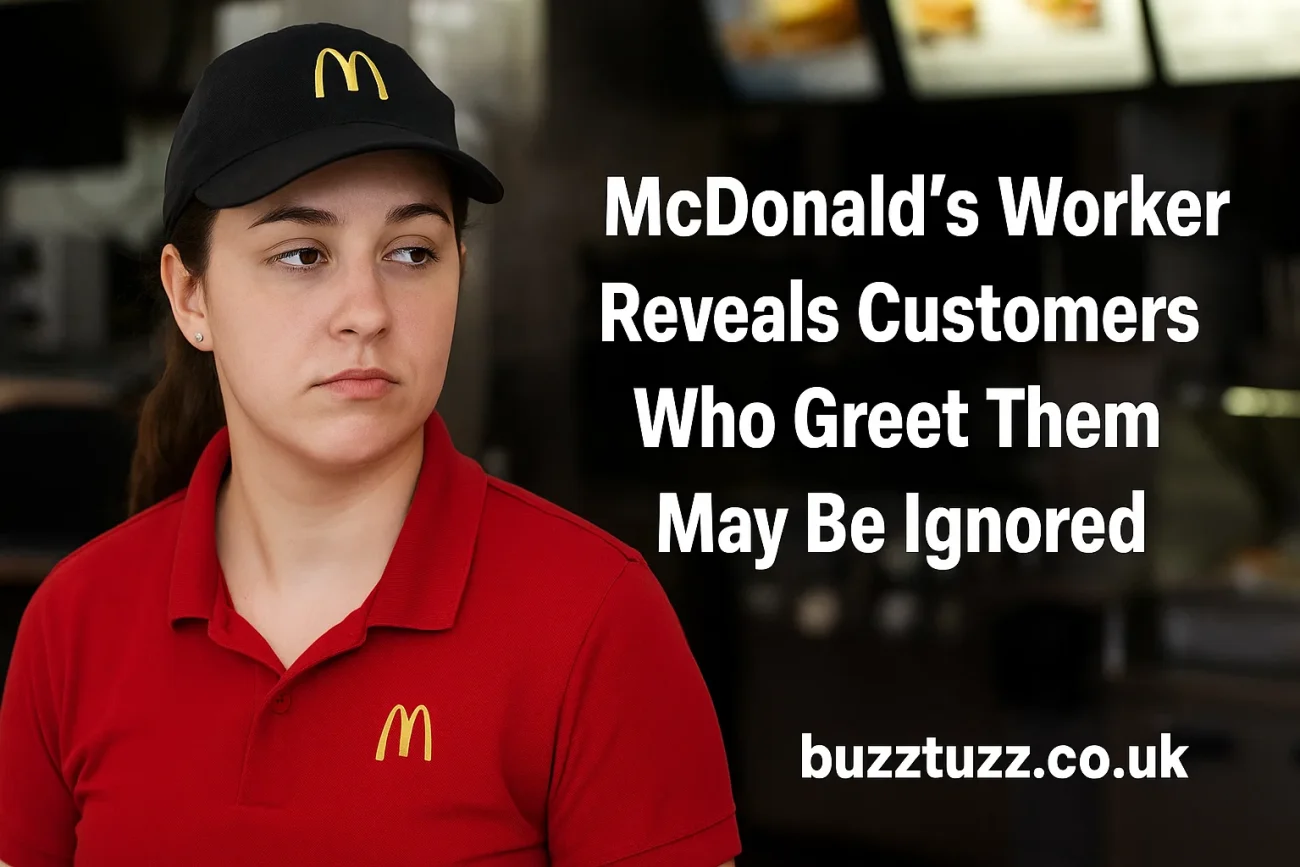
In an age where customer service is paramount, a recent revelation has stirred conversations across social media platforms and news outlets. A McDonald’s worker reveals customers who greet them may be ignored, challenging conventional expectations of politeness and service in the fast-food industry. This statement, initially shared on TikTok, has since gone viral, prompting discussions about the realities faced by fast-food employees and the dynamics of customer interactions.
This article delves deep into the reasons behind this phenomenon, exploring the pressures of the fast-food environment, employee experiences, and the broader implications for customer service standards.
The Viral Revelation: A Closer Look
The statement that “McDonald’s worker reveals customers who greet them may be ignored” originated from a TikTok video posted by a McDonald’s employee. In the video, the employee humorously highlighted how customers who immediately say “hello” upon arriving at the drive-thru might be unintentionally ignored. The video quickly gained traction, sparking debates and discussions across various platforms.
While some viewers found the video amusing, others were taken aback, questioning the professionalism of ignoring polite customers. However, many current and former fast-food employees chimed in, offering insights into the challenges of their roles and the reasons behind such interactions.
Understanding the Fast-Food Work Environment
High-Pressure Settings
Fast-food restaurants like McDonald’s operate in high-pressure environments where efficiency and speed are crucial. Employees are often tasked with handling multiple orders simultaneously, ensuring accuracy, and maintaining quick service times. In such settings, even a brief exchange can disrupt the flow, leading to potential delays.
Automated Systems and Protocols
Modern drive-thru systems are equipped with sensors and alerts that notify employees when a car arrives. This means that employees are already aware of a customer’s presence, making immediate greetings from customers redundant. In some cases, these premature greetings can interfere with automated messages or ongoing communications, causing confusion.
Emotional and Physical Fatigue
The demanding nature of fast-food work can lead to both physical and emotional fatigue. Repetitive tasks, long hours, and the expectation to maintain a cheerful demeanor can take a toll on employees. As a result, workers may become desensitized or prioritize task completion over customer engagement.
Inside Perspectives from Employees
Firsthand Accounts
Numerous employees shared their experiences online following the viral TikTok video. Many confirmed that early greetings from customers can indeed be missed, not out of rudeness, but due to multitasking or waiting for a system cue to respond. Employees often juggle taking orders, preparing food, managing the front counter, and communicating with coworkers.
Quotes from Industry Veterans
“We’re not ignoring customers on purpose,” said a former shift manager at McDonald’s. “There’s a lot happening behind the scenes. If someone says ‘hello’ right as I’m switching headsets or checking an order, it’s easy to miss.”
Training Protocols and Communication Gaps
Standard Operating Procedures (SOPs)
McDonald’s employees undergo specific training to follow standardized communication protocols. These are designed to maintain order and consistency across thousands of locations worldwide. Greeting customers before receiving the green light from the system may not align with these protocols.
Technology Dependence
Drive-thru intercoms are programmed to initiate the interaction, which means that any unsolicited greetings from customers might not be heard if the system hasn’t been activated. This technical factor contributes significantly to the perceived ‘ignoring’ of customers.
Customer Expectations vs. Operational Reality
Politeness and Service Expectations
Customers often associate a pleasant greeting with good service. Being ignored—whether intentionally or not—can feel disheartening or even disrespectful. The discrepancy between customer expectations and employee capabilities plays a critical role in shaping these interactions.
Cultural Differences in Interaction
Cultural norms around greetings and customer service vary. In some countries, a lack of verbal interaction is acceptable, while in others, it’s seen as rude. McDonald’s, as a global brand, often must balance these cultural expectations with standardized procedures.
Social Media’s Role in Shaping Perception
The Power of Virality
Social media platforms like TikTok and Twitter amplify individual experiences. A single post can shape public opinion and influence corporate behavior. The viral McDonald’s video highlights the gap between employee realities and customer perceptions, often misunderstood by those outside the industry.
Public Backlash and Support
The reaction to the viral video was mixed. Some criticized the employee for perceived unprofessionalism, while others empathized with the challenges they face. This polarizing response underscores the need for greater transparency and empathy in understanding service industry dynamics.
Improving the Customer Experience Without Overburdening Staff
Technological Solutions
Advancements like AI-powered kiosks and voice assistants can streamline operations and reduce pressure on human employees. These innovations can handle initial greetings and routing, allowing staff to focus on order accuracy and food preparation.
Empathy in Design
Redesigning workflows and systems with employee well-being in mind can improve both customer satisfaction and employee morale. McDonald’s and similar chains should invest in user-centric design to bridge the gap between tech and touch.
Training That Encourages Balance
Empowering employees with soft skills training that emphasizes empathy, while also providing them tools to handle stress, can create more meaningful customer interactions. Balancing efficiency with empathy is key.
Case Studies: What Other Brands Are Doing Right
Chick-fil-A’s Model
Chick-fil-A is frequently lauded for its exceptional customer service. The brand emphasizes thorough training and employee satisfaction, which translates to more engaged customer interactions. Employees are taught to anticipate customer needs while managing workflow efficiently.
Starbucks’ Human Touch
Starbucks prioritizes personalization and connection, even during peak hours. Their model shows that even brief but genuine interactions can make a significant difference in customer experience without compromising speed.
Conclusion:
The viral statement that a McDonald’s worker reveals customers who greet them may be ignored sheds light on a deeper, systemic issue. It’s not about intentional rudeness or laziness—it’s about navigating the high-stress, high-demand world of fast food where employees juggle multiple tasks simultaneously.
Improving communication, leveraging technology, and fostering empathy—from both sides—can help create a better experience for all involved. As consumers, a little patience and understanding can go a long way. And for corporations, investing in better training, systems, and employee well-being isn’t just good ethics—it’s good business.
